Reading a North Cyprus New-Build Like a Designer
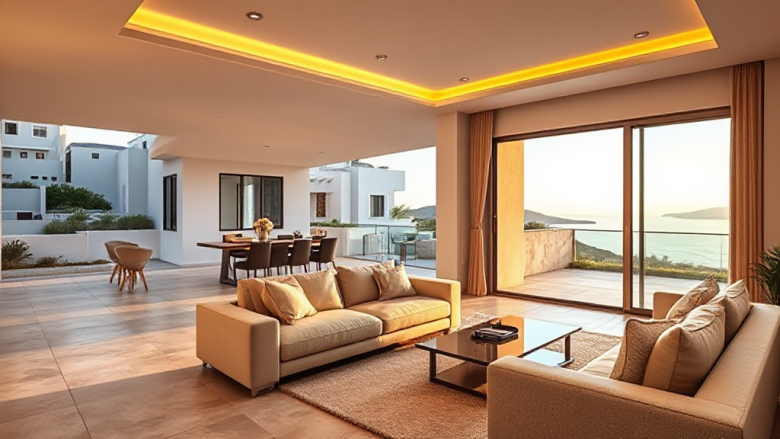
The render shows a sunlit terrace, a glass balustrade and a kitchen that looks lifted from a magazine. The finished apartment, six months later, may have a different ceiling height, a different grout line and a different relationship with the afternoon sun. The gap between the two is where most buyer regret lives. If you are scanning North Cyprus real estate for sale, the useful skill is not spotting the prettiest picture — it is reading the building behind it. Here is the checklist an interior architect would carry onto site.
What the brochure render is really telling you
A render is a sales document, not a construction drawing. It is lit artificially, furnished with pieces that may never exist in the handover package, and cropped to hide the neighbouring block. That does not make it dishonest; it makes it incomplete. Your job is to translate the image into questions.
Start with the things a render always flatters: ceiling height, window size and the depth of the terrace. A wide-angle lens makes a 2.6-metre living room feel generous. Ask for the floor plan with dimensions printed on it, then compare the sofa depth to the room width. If the plan has no dimensions, that is your first warning.
Look at what is missing. Where is the air-conditioning condenser? Where does the kitchen extract vent? Is there a storage cupboard, or has it been quietly omitted to make the hallway look longer? A designer reads absence as carefully as presence. The render is a mood; the plan is the contract.
Materials and finishes: where quality actually shows
Most North Cyprus new-builds sit in a similar price band, so the difference between a good and a mediocre one is rarely the headline specification. It is the layer beneath it. Ask for the finish schedule — the document that names the tile, the joinery, the sanitaryware and the paint — and read it line by line.
Surfaces that age well in a coastal climate
Salt air and strong UV are unforgiving. Porcelain floor tiles outperform polished marble on a terrace because they resist staining and stay cooler underfoot. Powder-coated aluminium window frames outlast untreated steel near the sea. External walls should be rendered and painted rather than left as fair-faced block, which hairline-cracks within a season.
Inside, look at the joinery. Soft-close hinges and full-extension drawer runners are cheap to specify and expensive to retrofit. If the kitchen carcasses are chipboard with a thin melamine face, expect swelling near the sink within a few years. Moisture-resistant board and a proper upstand are the quiet markers of a developer who has thought past handover.
Bathrooms and wet areas
Waterproofing is invisible and therefore negotiable. Ask whether the shower tray is recessed or surface-mounted, whether the walls are tanked behind the tile, and whether there is a floor drain. A surface-mounted tray with a bead of silicone is a leak waiting for its moment. Wet areas reveal more about build quality than any lobby chandelier.
Orientation, light and the sea view that stays
In North Cyprus, a south-facing terrace can be glorious in April and punishing in August. Orientation decides how you will actually live in the apartment, not just how it photographs. A west-facing living room gets the sunset and the heat load; an east-facing bedroom gets morning light and a cooler evening.
Cross-ventilation matters more than air-conditioning. If the plan allows a through-breeze from a sea-facing window to a corridor window, the flat will feel fresher and cost less to cool. Check whether the main glazing is shaded by a balcony above or an external overhang — a deep reveal is a passive cooling device that no render will label.
Sea views are the most oversold asset in coastal property. Stand on the actual plot and look at the empty land between you and the water. Ask what the zoning allows there. A view is only as permanent as the plot in front of it, and a second-row apartment with a protected foreground can outperform a front-row one that will be built out.
Reading the building on site, from lobby to roof
The site visit is where the render meets reality. Go in the afternoon when the sun is on the facade, and walk the route you would take every day — car park, entrance, stair core, lift, corridor, front door. Communal areas are the first thing to degrade and the last thing the developer is judged on.
- Entrance and stair core: natural light, ventilation, and whether the stair treads are stone or a painted screed.
- Lift: brand, service contract and whether there is a backup power supply.
- Corridors: ceiling height, fire doors and the quality of the floor finish.
- Roof: insulation, water tank access and whether the lift motor room is properly ventilated.
- Boundary and drainage: where rainwater goes and whether the plot slopes toward the building.
Then walk the apartment itself with a torch and a spirit level. Check that door frames sit square, that floor tiles are lipless at the joints, and that windows open without binding. Small misalignments at handover become squeaks and cracks later. If you are comparing several schemes, the North Cyprus real estate for sale listings are a useful way to line up developments, prices and locations before you book viewings.
Questions to ask the developer before you commit
A confident developer answers specification questions without flinching. A vague one changes the subject to payment plans. Bring a short written list and ask for answers in writing; the replies become part of your record if anything is disputed at handover.
- Can I see the finish schedule and the construction drawings, not just the sales plan?
- Who is the main contractor, and have they completed a project of this size before?
- What is the snagging and defect liability period, and who inspects before handover?
- Is there a residents’ management plan, and what will the annual service charge cover?
- What is the title deed status, and when will individual deeds be issued?
- Which fixtures are included, and what is the cost to upgrade the kitchen and bathrooms?
Be equally clear about what you are buying into. A new-build is a package of building, location, management and paperwork. Ask for the title deed position in writing before paying a reservation fee. The same discipline applies to taxes and transfer costs, which vary by contract and status; a local independent lawyer should review the terms before you sign.
Verdict: what a well-built North Cyprus home feels like
When the building is right, you notice it quietly. Doors close with a solid thud. The terrace is deep enough to sit on at noon. The bathroom dries out. The corridor still smells of paint rather than damp two summers later. None of that appears in a glossy render, and all of it is visible on a site visit if you know where to look.
Design-led buying is not about demanding luxury; it is about demanding coherence — materials that suit the climate, orientation that suits the day, and a developer who can explain every choice. Use the pictures to shortlist, the plans to compare and the site to decide. That sequence turns a brochure into a home you will still enjoy when the novelty has worn off.