Biophilic Rooms: Small Nature Changes With Real Health Payoffs
A client of mine once described her home office as “a place where ideas go to die.” She had a good desk, decent light, and a chair that cost more than my first car. What she did not have was anything alive in the room. We added a single pothos on the filing cabinet and started opening the window beside her desk for twenty minutes each morning. Two weeks later she told me she was finishing work before six. Nothing about her job had changed. The room had. That small experiment is the heart of what designers now call biophilic interiors, and it is one of the most reliable tools I know for making a home feel better to live in. If you are curious about the wider world of Gardening, you already have most of the instincts you need. You just have to point them indoors.
Biophilia is the idea that humans have an innate pull toward living systems. We are calmer near plants, water, natural light and organic shapes because our nervous systems evolved in those settings. Bringing those cues inside is not decoration for its own sake. It is a quiet form of health infrastructure, and it works room by room.
Start With the Home Office
The workspace is where biophilic design earns its keep fastest, because attention is the currency there. A single medium plant placed in your peripheral vision gives your eyes a soft place to rest between screen tasks. This matters more than most people realize: staring at a wall keeps your focus locked in a narrow band, while a leaf edge or a moving stem offers what researchers call soft fascination. Your attention recovers without leaving the desk.
Pair the plant with one openable window, even a small one. Twenty minutes of cross-ventilation in the morning clears stale air and drops carbon dioxide levels that build up overnight in sealed rooms. If your window faces a street, add a small fan to keep air moving. The combination of greenery and fresh air is the cheapest cognitive upgrade available to a remote worker.
Turn the Living Room Into a Breathing Space
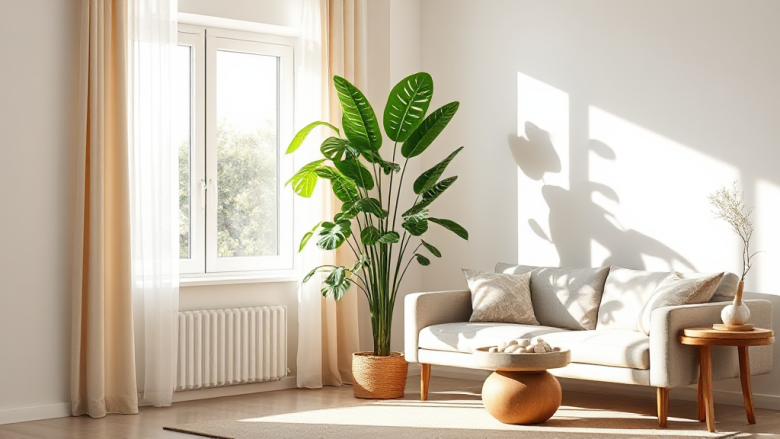
Living rooms tend to collect screens, so the goal here is contrast. Choose one large floor plant, like a rubber tree or a monstera, and let it sit where it can be seen from the sofa without being in the walking path. Large specimens read as architecture, not clutter, and they anchor a room the way a rug does.
Then borrow from the outdoor world you already love. A bowl of stones, a driftwood piece, a woven basket, a linen throw in a mossy green: these are the textures of Nature translated into objects that do not need watering. Natural materials also age well, which means the room looks better in year three than it did in month one.
Calm the Bedroom With Green and Dark
Bedrooms respond to biophilic choices differently. Here you want low light and low stimulation, which means no bright windowsill full of thirsty plants. A snake plant or a ZZ plant in a corner handles dim conditions and needs water only every few weeks. Both are forgiving enough for people who forget things.
What matters more in the bedroom is color temperature. Swap cool white bulbs for warm ones, ideally around 2700K, and add a dimmer if you can. Your body reads warm, low light as evening, which supports melatonin production. A single plant plus warm light is a genuine sleep intervention, not just a styling choice.
Make the Kitchen a Working Greenhouse
The kitchen is the most practical room for indoor growing because it already has humidity, light and daily traffic. Herbs are the obvious starting point: basil, mint, thyme and rosemary all thrive on a sunny counter. Snip them while you cook and you get the sensory payoff of gardening without a garden bed.
If you have a window above the sink, consider a small hanging planter. It keeps herbs out of the way and puts green directly in your line of sight while you wash dishes, which is one of the most repeated tasks in any home. That repetition is exactly why the placement works. Small, frequent moments of green do more for mood than one dramatic display you pass twice a week.
Let the Bathroom Go Tropical
Bathrooms are humid, warm and often have a frosted window, which makes them ideal for ferns, calatheas and pothos. These plants love the moisture that other rooms lack. A fern on a shelf or a trailing pothos on the edge of the tub turns a purely functional room into something closer to a spa.
There is a health angle here too. Bathrooms are prone to damp and mold, and plants will not fix a ventilation problem on their own. Use them alongside a working fan and an open window when possible. Think of greenery as the finishing layer, not the solution.
Use Light, Texture and Scent as One System
Plants get the attention, but biophilic design is really a system of four cues: light, texture, sound and scent. Maximize daylight by keeping windowsills clear and using sheer curtains instead of heavy blinds. Add texture through wood, stone, clay and wool. Introduce sound with a small fountain or simply by opening a window to birdsong. Scent can come from fresh herbs, a cedar box, or a bowl of dried citrus.
When these cues work together, people rarely notice them individually. They just say the room feels good. That is the goal. If you want to go deeper into the research and everyday practice behind these ideas, the guides at Health cover the broader picture of how environment shapes wellbeing, and they pair well with what you are building at home.
Match Plants to Real Conditions
The most common mistake I see is buying plants for how they look rather than for the light a room actually gets. A fiddle leaf fig in a north-facing hallway will fail no matter how much you love it. Before you buy anything, stand in the spot at three different times of day and note the light. Then choose accordingly.
Low light: snake plant, ZZ plant, pothos, cast iron plant. Medium light: peace lily, philodendron, spider plant. Bright, direct light: succulents, herbs, citrus, jade. Group plants with similar needs together so watering stays simple. A cluster also raises local humidity, which most houseplants appreciate.
Your Closing Checklist
Before you finish, walk your home and tick these off. One living plant in every room you use daily. At least one window opened for twenty minutes each morning. Warm bulbs in bedrooms and lamps. Two natural materials visible from your main seat in each room. One scent source that is real rather than synthetic. One plant placed where you will see it during a repeated task, like dishes or emails. And a watering day written on the calendar, because biophilic rooms only stay healthy when the care is as consistent as the design.
Start with the room you use most and add one plant and one open window. That is the whole method. Everything else is refinement, and refinement is a pleasure when the room already feels alive.