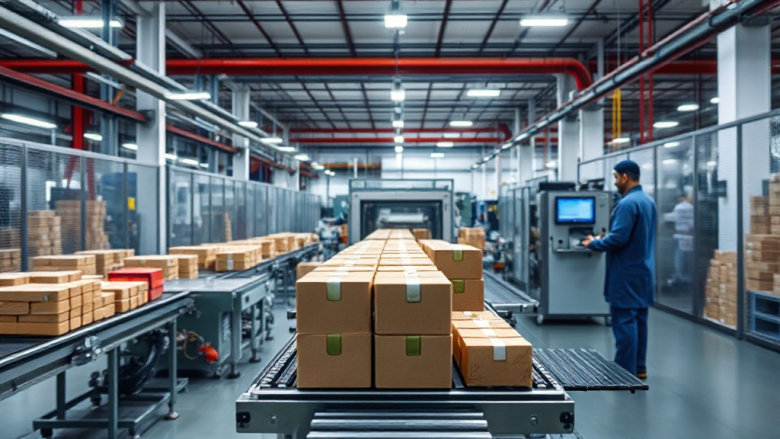
Automatic vs Semi-Automatic Shrink Wrapping: A Buyer’s Checklist
Your packing bay has outgrown manual wrapping. Cartons are stacking up, film waste is climbing, and the team is working overtime just to keep the dispatch truck on schedule. The next decision is not whether to buy a shrink tunnel Machine but which level of automation fits your line, your labour reality and your budget over the next five years.
This checklist is written from the procurement desk of a growing FMCG unit, so it treats the purchase as a decision framework rather than a product catalogue. Work through each section, note where your plant sits today, and the right configuration usually becomes obvious.
Start With the Real Throughput Number, Not the Brochure Number
Every supplier quotes a maximum speed. Your job is to find the sustained speed your shift pattern can actually feed. A tunnel rated at 40 packs per minute is only useful if upstream collation and downstream palletising can keep pace without a buffer pile-up.
Measure three things before you shortlist anything: peak packs per shift, average pack size range, and the longest single-product run you expect in a week. A semi-automatic line handles steady medium volumes well; an automatic line earns its cost when the same pack format repeats for hours.
Automatic or Semi-Automatic: The Decision Table in Words
Think of this section as a comparison table you would sketch on a whiteboard. On the left, list your operating conditions. On the right, note which configuration absorbs them without adding hidden labour.
Labour Dependency
Semi-automatic equipment still needs an operator to load sleeves or centre the product before the tunnel. That is fine for two or three SKUs with slow changeovers. An Automatic Shrink Wrapping machine removes that loading step, which matters most when you run multiple shifts and struggle to staff the packing bay.
Changeover Frequency
Count how many times a day you switch film width, pack length or collation pattern. Frequent changeovers favour semi-automatic lines with simple mechanical adjustments. Long runs of one format favour automatic infeed and sealing, where setup time is amortised across thousands of packs.
Floor Space and Utilities
Automatic lines need infeed conveyors, accumulation space and often a larger compressed-air supply. If your bay is tight, a compact semi-automatic tunnel plus a manual sealing station may be the only practical layout.
Operator Skill and Maintenance Access
Automatic systems demand planned preventive maintenance and at least one trained technician on site. Semi-automatic machines are more forgiving when maintenance resources are thin, but they depend heavily on operator consistency for seal quality.
Cost of Ownership: Where the Real Money Sits
The purchase price is the smallest number in a five-year calculation. Film consumption, energy draw, spare-part lead times and downtime cost usually decide the outcome.
Automatic lines typically reduce film waste because sleeve length and sealing are controlled by sensors rather than operator judgement. They also cut labour cost per pack, but they raise the cost of a stoppage: a jam on an automatic line can idle an entire shift, while a semi-automatic line keeps running at reduced speed.
Ask every supplier for the same four figures in writing: film cost per 1,000 packs, connected load in kW, recommended spare-parts kit, and average response time for service calls. Compare those, not just the quotation total.
- Film cost per 1,000 packs at your actual pack mix
- Connected electrical load and hourly running cost
- Annual preventive maintenance spend
- Estimated downtime hours per year and the cost of each hour
A semi-automatic line often wins on total cost when volumes are below roughly a single-shift operation. Above that, the labour saving of automation usually repays the premium within a reasonable horizon. Model both scenarios at your own wage rates before signing.
Technical Checks That Separate a Good Tunnel From a Costly One
Whether you choose automatic or semi-automatic, the tunnel itself determines pack quality. Inspect these points on a demonstration run using your own film and product.
Tunnel Length and Conveyor Type
Longer tunnels give the film more time to shrink evenly, which matters for bulky or irregular packs. Check whether the conveyor is roller, mesh or belt, and confirm it handles your smallest and largest pack without tipping.
Heating and Airflow Control
Ask how heat is distributed and whether temperature zones are adjustable. Uneven airflow produces loose corners and scorched film, the two most common quality complaints on a Shrink wrapping machine line.
Sealing and Film Compatibility
Confirm the sealing system suits the film you intend to buy, and that the machine accepts the film widths available in your region. Locking yourself into one proprietary film size is an avoidable long-term cost.
Safety and Controls
Look for guarded entry points, emergency stops at both ends, and a control panel an operator can read without leaning into the heat zone. Simple controls reduce training time and mistakes.
Common Buying Mistakes and How to Avoid Them
The most expensive error is buying for today’s volume instead of the volume you expect within two years. A machine that is already at capacity on installation day leaves no headroom for a new SKU or a second shift.
The second mistake is skipping a live demonstration with your own product. Film behaviour changes with pack shape, weight and surface texture, and a demo with the supplier’s sample carton tells you very little.
The third is ignoring serviceability. Ask where spare parts are stocked, how quickly a technician can reach your plant, and whether the supplier provides operator training. Service response time is part of the machine specification, not an afterthought.
Finally, resist buying the cheapest configuration without checking film compatibility and energy draw. A low quotation can hide higher running costs that compound every month.
Frequently Asked Questions
Is a semi-automatic shrink tunnel worth it for a small factory?
Yes, if your volumes fit within one or two shifts and your SKU range changes often. It keeps capital outlay low and tolerates variable operator skill, provided you maintain consistent sealing discipline.
How much floor space does an automatic line need compared with a semi-automatic one?
Automatic lines need additional infeed, accumulation and outfeed space, often considerably more than a compact semi-automatic tunnel. Measure your bay including clearance for maintenance access before finalising the layout.
What film should I plan for when comparing machines?
Confirm the film type and width each machine accepts, then price that film locally. A machine that only runs one proprietary width can cost more over five years than a slightly dearer unit with flexible film compatibility.
How do I estimate the payback period?
Add labour savings, film savings and reduced rework, then subtract added maintenance and energy cost. Divide the net annual saving into the price difference between the two configurations to get a realistic payback estimate.
Verdict: Which Configuration Should You Shortlist?
If you run long, repetitive production with multiple shifts and can support planned maintenance, shortlist automatic. If you run mixed SKUs, limited space or a single shift, a semi-automatic line with a well-chosen tunnel will serve you better and leave budget for film and training.
Whichever path you take, evaluate the tunnel on sustained throughput, film cost and service response rather than headline speed. A structured checklist turns a confusing equipment purchase into a defensible procurement decision your finance team can sign off with confidence.